
Sharing our favourite moments, must‑see spots, and key tips for Athens and Santorini trip
Disclaimer: This blog post is based on our personal travel experience and is shared for general informational purposes only. Travel details (including prices, opening hours, visa requirements, and transport options) can change without notice, so please verify the latest information directly with official websites and service providers before you book or travel.
Some parts of this guide reflect what we experienced during a short visit to each city, so your experience may differ. If you’d like help planning a longer Vietnam itinerary – including flights, tours, and accommodation – feel free to contact me for personalised travel planning.
Greece had been on our bucket list for a long time, and we finally made it happen. We spent three nights in Santorini and three nights in Athens, travelling to Greece from Rome. Our flight landed in Santorini first, with a short stopover in Athens, and after soaking up island life we flew back to Athens for the cultural part of the trip before heading home to Australia.
This combination turned out to be perfect – breathtaking island views followed by ancient history, amazing food, and walkable city life.
Santorini – Worth Every Bit of the Hype
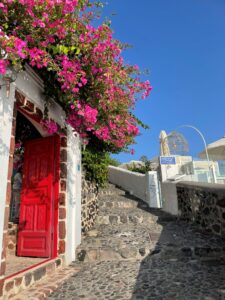
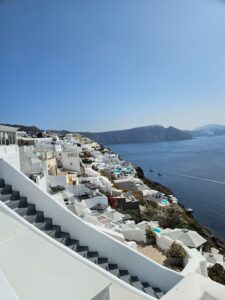
This is one of those places that genuinely looks even better in real life than in photos, and for us, it absolutely lived up to the hype. White‑washed houses clinging to cliffs, blue‑domed churches, splashes of pink bougainvillea, and dramatic caldera views appear at almost every turn – we honestly never stopped taking photos.
What really stands out is the sheer scale of the landscape. The caldera feels vast and dramatic, and the villages seem to float high above the sea, creating views that are far more impressive in person than they ever appear on screen. Even the simplest walks turned into postcard‑worthy moments.
We spent three nights on the island, and despite Santorini’s popularity, it never felt overwhelmingly crowded. Some areas, like Fira – one of the island’s main hubs known for its shops, restaurants, and cafés – were understandably lively and busy. But what we loved was how easy it was to step away from that energy. With just a short walk from the main streets, the atmosphere quickly became calmer, with fewer people and more open space to enjoy the views and take photos at our own pace. That balance made it easy to slow down and truly enjoy the scenery, the atmosphere, and the relaxed pace of island life.
Where We Stayed
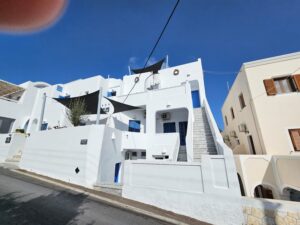
We stayed at Summer Time Villa in Fira, just about 100 metres from Fira town centre. The location was incredibly convenient – close enough to walk everywhere, yet quiet enough at night.
One thing to note (which is very common in Santorini): stairs. There were stairs to manage our luggage, but the central location and views made it worth the effort. If you’re travelling light, you’ll appreciate staying this close to town.
October Weather: What to Expect
October weather in Santorini was ideal for us. Days were pleasantly warm without the extreme summer heat, and evenings were cool enough to enjoy walking around town comfortably. It was perfect sightseeing weather, and much less crowded than peak summer months.
Getting Around the Island
We mostly used public buses, which were affordable and easy to use. Buses connect Fira with places like Oia, beaches, and archaeological sites.
You’ll also notice donkey rides, especially on steep paths. We personally chose not to ride donkeys, as we didn’t feel comfortable doing so. There are also restrictions and regulations in place to protect the animals, and many visitors now opt for alternatives like the cable car, which connects the old port with Fira and offers great views.
Places We Visited
These are the memorable places we visited while exploring Santorini’s landscapes, history, and iconic scenery.
Akrotiri Archaeological Site
It is one of Santorini’s most fascinating historical attractions – an ancient city preserved beneath volcanic ash after a massive eruption around the 16th century BCE. Walking through the covered site, you follow raised pathways past remarkably well‑preserved multi‑storey buildings, stone staircases, streets, drainage systems, and storage rooms with large clay jars. These remains offer a rare glimpse into how advanced daily life was during the Bronze Age, with clear evidence of organised urban planning and trade.
Although many of the original frescoes are now displayed in museums, fragments and replicas help bring the city to life, showing scenes of nature, maritime activity, and everyday routines. The scale of the settlement and the level of preservation make it far more impressive in person than most people expect, with the modern roof providing shelter and making the site comfortable to explore year‑round.
Akrotiri is open 08:00–20:00 in summer and 08:30–15:30 in winter and is closed on Tuesdays. Tickets cost €20 (full) or €10 (reduced). On site, you’ll find toilets, a small gift shop, and refreshments, and tickets can be booked online via the Hellenic Heritage website, which is especially useful during busier periods.
The Three Bells of Fira

One of Santorini’s most iconic and photographed views, instantly recognisable by its blue-domed church, whitewashed walls, and the dramatic caldera backdrop. Officially known as the Catholic Church of the Dormition, this viewpoint perfectly captures the classic Cycladic aesthetic that Santorini is famous for. The contrast between the vivid blue dome, the three bells, and the deep Aegean Sea below makes it a favourite spot for photographers, honeymooners, and first-time visitors. Sunrise and late afternoon are especially magical, when soft light enhances the colours and reduces harsh shadows, giving photos a dreamy, postcard-quality finish.
To reach the Three Bells of Fira, walk from Fira town towards Firostefani along the caldera path (around 10–15 minutes). The church itself is not directly accessible, but the famous viewpoint is located just off the main pedestrian path – look for a small side path leading downhill near the church signage.
Oia Blue Dome
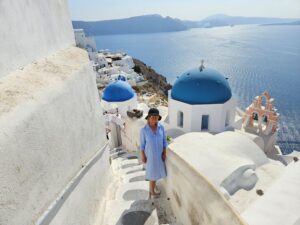
Tucked into Oia’s winding cliffside lanes, the blue dome is one of those places that makes you stop, breathe, and just stare for a moment. With its whitewashed walls, deep blue dome, and sweeping views over the Aegean Sea, it feels exactly like the Santorini you imagine before you arrive. You’ll find these iconic domes in the village of Oia, at the northern tip of the island, where small churches are quietly woven into narrow paths and sun‑drenched terraces. Getting here is part of the experience – you can hop on a public bus from Fira (around 30 minutes), rent a car or scooter for a scenic drive, or join a guided tour that stops at several viewpoints along the way. Once in Oia, slow down and explore on foot. Wander from the main square toward the castle ruins and follow the stairways down – some of the most beautiful photo spots are hidden just off the main paths, waiting to be discovered.
Tips for Taking Iconic Dome Photos:
- Expect a queue – and be patient. This blue dome is one of Oia’s most sought‑after photo spots, and yes, there is often a line, especially from late morning to sunset. The queue usually forms along narrow stairways, and people take turns for the “classic angle.” Be prepared to wait anywhere from 10–40 minutes during peak hours, and keep your shots quick so everyone gets a turn.
- Go early, really early. Sunrise isn’t just about soft light – it’s about space. Before 8:00 AM, you’ll often find little to no queue, fewer people walking into your frame, and a much calmer atmosphere.
- Have your camera settings ready before your turn. When it’s busy, this makes a huge difference. Frame your shot, test exposure nearby, and know exactly what angle you want so you don’t feel rushed once you’re in position.
- Use zoom instead of stepping forward. Many iconic angles are close to private homes or churches. A zoom lens (or phone zoom) helps you capture the dome cleanly without crossing boundaries or upsetting locals.
- Look beyond the famous angle. While the “Instagram view” is beautiful, some of the most meaningful shots come from slightly lower staircases, side paths, or moments when the dome is framed with flowers, bells, or rooftops.
- Dress with contrast in mind. Light blues, beige, or flowing fabrics stand out beautifully against the white walls, while busy patterns can distract from the scene.
Oia Castle
This is also known as the Byzantine Castle Ruins, is the most famous spot in Santorini for sunset views, offering a breathtaking panorama over the caldera as the sun slowly sinks into the Aegean Sea. Perched at the edge of Oia village, the castle attracts large crowds every evening, so for the best experience – and the best photos – arrive 1–2 hours before sunset to secure a good position along the stone walls. When photographing, a wide-angle lens works beautifully to capture the sweeping sky and coastline, while a slight zoom is perfect for isolating the sun as it meets the horizon or creating dramatic silhouettes of domes, windmills, and rooftops. Be mindful of others sharing the space; tripods are often discouraged during busy hours, so handheld shots or a compact setup are ideal. If the main platform feels too crowded, explore nearby terraces, stairways, or just outside the castle area for equally stunning views with fewer people – and don’t rush off once the sun disappears, as some of the most magical colours appear after sunset, when the sky turns soft pink and purple and Oia begins to glow with evening lights.
Santorini beaches
Shaped by Santorini’s volcanic past, the island’s beaches offer a striking contrast to typical white‑sand shores, with black, red, and dark grey sand that feels warm and textured underfoot. Perissa Beach is one of the most popular choices, known for its long stretch of black sand, sunbeds, cafés, and calm waters, and can be reached by public bus from Fira in about 25-30 minutes or by car. Nearby Perivolos Beach has a trendier feel with beach clubs and seafront dining, while Kamari Beach, set against the dramatic Mesa Vouno mountain, is ideal for swimming and evening strolls. For a more dramatic landscape, Red Beach near Akrotiri stands out with its towering red cliffs and darker sand; it’s best reached by bus or car to Akrotiri, followed by a short walk. If you prefer something quieter and more scenic, Vlychada Beach offers surreal, wind‑sculpted rock formations and fewer crowds. A helpful tip when visiting is to bring water shoes, as the volcanic sand and pebbles can be hot and rough, and to visit earlier in the day when the light enhances the beach colours and the sand is cooler underfoot.
Food and Drinks in Santorini
Food in Santorini is more expensive than Athens, but we still found plenty of great options.
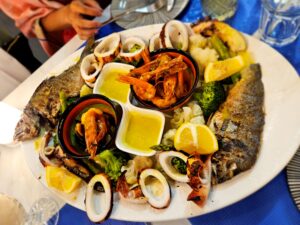
Typical food and drink costs:
- Gyros or souvlaki: AUD $8–$12
- Casual restaurant meal: AUD $25–$40 per person
- Seafood or caldera‑view dining: AUD $45+ per person
- Cocktails: AUD $16–$25
PK Cocktail Bar in Fira was one of our favourite spots for sunset drinks, thanks to its multiple terrace levels, sweeping caldera views, and a relaxed atmosphere that’s perfect for watching the sky change colours as the sun goes down. Cost: cocktails are typically around AUD $20–$25, and booking ahead is recommended, especially during peak sunset hours when it fills up quickly.
Shopping Guide – Where & What to Buy
Fira Shopping Area
- Located along the main pedestrian street near the caldera and cable car
- Easy to combine with sightseeing and café stops
- Best for:
- Jewellery stores
- Handmade leather sandals
- Local art galleries
- Ceramics and souvenir shops
- Generally, more variety and slightly better prices than Oia
Oia Shopping Area
- Spread along pedestrian lanes and scenic side streets
- More boutique and curated shopping experience
- Best for:
- Handmade jewellery boutiques
- Art prints and paintings
- Fashion and resort wear
- Natural Greek skincare and beauty products
What We Recommend Buying
- Handmade jewellery with local or Greek designs
- Greek ceramics (lighter pieces are easier to travel with)
- Local artwork or photography prints
- Olive‑oil‑based soaps and natural skincare products
Athens – The World’s Largest Open‑Air Museum
After Santorini, we flew to Athens and spent three nights exploring the city. Athens surprised us in the best way – it’s lively, historic, and full of character.
With ancient ruins scattered throughout the city, it truly feels like walking through history.
Where We Stayed
We stayed at Metis Athens Suites, which we found to be excellent value. The location was a huge plus:
- About 3 minutes’ walk to Monastiraki Square
- Around 400 metres from Ermou Street for shopping
Just like Santorini, there were stairs to carry luggage, but the central location made exploring Athens incredibly easy. Compared to other major European cities, accommodation here felt more affordable.
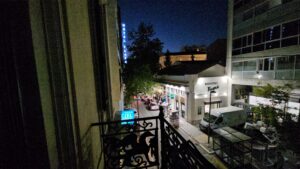


Weather in Athens
October in Athens was warm but comfortable, with sunny days that were ideal for walking and sightseeing, especially around outdoor archaeological sites. The evenings cooled down nicely, making it pleasant to stay out without feeling drained after a long day. We also noticed that it could be quite windy at times, particularly around open areas and hilltop sites, which actually helped keep the temperatures comfortable and made exploring feel less exhausting overall.
Getting Around the City
Athens is very walkable, especially in central neighbourhoods like Plaka and Monastiraki, where many major sights are close together, but we also made good use of the metro and buses, which are affordable, reliable, and easy to understand. Athens uses a unified Ath.ena ticket system, meaning the same ticket works across metro, buses, trolleybuses, and trams within its validity period. A single ticket costs €1.20 and is valid for 90 minutes, allowing transfers between different transport types during that time. There are also day tickets (€4.10) and 5‑day tickets (€8.20), which are great value if you’re using public transport frequently. When using buses, it’s important to know that cash is not accepted onboard – tickets must be purchased in advance from metro or tram stations, ticket machines, kiosks, or convenience stores, and then validated when boarding. Overall, once you understand the ticket options, Athens’ public transport system is a budget‑friendly and stress‑free way to get around the city
Places to Visit: Attractions, Tickets & What to Expect
The city is packed with historical sites, many of them within easy walking distance of each other. It truly feels like an open‑air museum, with ancient ruins appearing as you wander through the streets.
Acropolis (Ancient Site – Parthenon Hill)
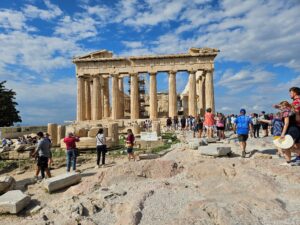
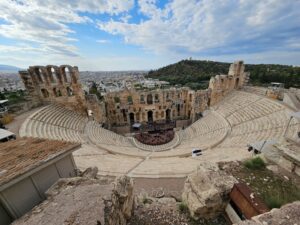
This was one of those “wow, I can’t believe I’m really here” moments. The Acropolis is the big one –the iconic hilltop ruins you see in every photo – and it absolutely lives up to the hype. Up there you’ll see the Parthenon, the Erechtheion with its Caryatid columns, and the Temple of Athena Nike, plus some seriously incredible views across the city (it’s honestly worth it for the panoramas alone). As you explore the slopes, you’ll also pass the Odeon of Herodes Atticus, a beautifully preserved ancient theatre that’s still used for performances today and adds even more atmosphere to the visit.
Opening hours are seasonal, but as a simple rule it opens daily at 8:00 AM and closes later in summer and earlier in winter, so going earlier in the day helps (both for crowds and comfort).
For costs, the standard Acropolis site ticket is €30 (with reduced categories available), which is the price you’ll see listed through the official culture/heritage channels.
Acropolis Museum (Separate Ticket)
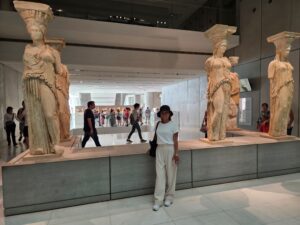
Now, this is where the confusion happens (it got me too at first): the Acropolis Museum is not included in your Acropolis hill ticket. It’s a completely separate attraction – a modern museum near the base of the hill – and it’s brilliant because it helps everything you saw on top make sense. Inside you’ll find major pieces from the Acropolis, beautifully displayed, and the ticket also includes access to the archaeological excavation under the museum (which is such a cool surprise).
Museum entry is €20 general or €10 reduced, and you can buy tickets either at the Museum Ticket Desk or through their official museum e‑ticketing online.
Also worth noting: the museum itself warns about fake websites – the safest option is always the official domain when purchasing online
Acropolis Combo Ticket (Multi‑Site Pass) – What It Actually Means
If you’re planning to see more ruins than just the Acropolis, this is the ticket that can save you both money and hassle. The Acropolis Combo Ticket is basically a multi‑site pass that covers 7 major archaeological sites and is typically valid for 5 days from first use.
It includes: Acropolis & Slopes, Ancient Agora, Roman Agora, Hadrian’s Library, Temple of Olympian Zeus (Olympieion), Kerameikos, and Aristotle’s Lyceum.
The way it works is: you usually select a specific time slot for the Acropolis when buying (because that’s the busiest site), then the other locations are more flexible within their opening hours.
A couple of helpful things to know: it’s typically one entry per site, so it’s best if you’re doing a proper sightseeing run rather than revisiting the same place multiple times.
And the most important reminder (because it trips up so many people): the combo ticket does NOT include the Acropolis Museum – the museum is always a separate purchase.
Hadrian’s Library
Located right beside Monastiraki Square, this compact archaeological site is easy to miss from the outside but surprisingly peaceful once you step in. Built in 132 AD by Roman Emperor Hadrian, it functioned as a cultural centre with reading rooms, lecture halls, and a large central courtyard surrounded by columns. Today, you’ll see Corinthian columns, sections of the original walls, and the remains of Byzantine‑era churches built within the ruins, giving a real sense of how the space evolved over centuries.
It’s a short visit, about 30–45 minutes and pairs perfectly with the nearby Roman Agora. The entry fee is €10 (reduced rates available), and it’s included in the Acropolis combo ticket, which makes it an easy and worthwhile stop if you’re already visiting multiple ancient sites in the area.
Syntagma Square

The heart of the modern city and a great place to pause and people watch, this square is where everyday life, history, and movement all come together. Locals pass through on their daily routines, visitors gather with cameras in hand, and the constant flow of people makes it a perfect spot to sit back for a moment and take in the city’s energy.
What to see
- The Hellenic Parliament, standing prominently above the square
- The Changing of the Guard ceremony at the Tomb of the Unknown Soldier
- Cafés and open public spaces ideal for resting, people‑watching, and soaking up the atmosphere
Plaka & Anafiotika
Two of the most charming neighbourhoods to wander, these areas feel like stepping into a slower, more traditional side of the city. Plaka is lively and colourful, perfect for relaxed strolls and casual stops, while Anafiotika feels quietly tucked away, offering a surprising sense of calm just moments from the bustle below.
What you’ll find
- Narrow streets and traditional houses that are perfect for wandering without a plan
- Cafés, souvenir shops, and tavernas ideal for taking breaks and soaking up the atmosphere
- Anafiotika’s village‑like feel, hidden beneath the Acropolis, with whitewashed homes and peaceful corners that feel worlds away from the city noise
Food & Drinks We Loved
Food was one of the highlights of our trip, and we were pleasantly surprised by how affordable and satisfying everything was compared to many other European cities. Whether it was grabbing something quick between sightseeing stops or sitting down for a relaxed meal, it was easy to eat well without overspending. On average, a gyros or souvlaki cost around AUD $6–$10, while street food or casual meals came in at AUD $12–$18 per person. A proper restaurant meal was still reasonably priced at AUD $20–$35 per person, with coffee usually around AUD $4–$6, and sweet treats like loukoumades costing about AUD $6–$10.
We especially loved keeping things simple – gyros and souvlaki were our go‑to options, perfect for lunch on the go and surprisingly filling, while loukoumades (Greek donuts) quickly became a must‑try dessert whenever we spotted them. For places to eat, we found it hard to go wrong around Monastiraki, Plaka, and near Syntagma Square, where there’s a great mix of casual eateries and traditional tavernas. These areas made it easy to find good food at almost any time of day, whether we wanted something quick or a sit‑down meal, without stretching the budget.
If you’re sightseeing all day, street food is an easy and budget‑friendly option, while evenings are perfect for sitting down at a local taverna and enjoying Greek dishes at a relaxed pace.
Entry Requirements for Australian Passport Holders
(Last checked March 9, 2026)
Visa‑Free Travel (Short Stays)
Australian passport holders can travel to Greece visa‑free for tourism or short stays for up to 90 days within any 180‑day period across the entire Schengen Area.
This 90‑day limit applies collectively, not per country. Time spent in Greece, Italy, France, Spain, and other Schengen countries all count toward the same total.
Passport Validity Rules
When entering Greece (or any Schengen country), your passport must:
- Be issued within the last 10 years
- Be valid for at least 3 months after your planned departure from the Schengen Area
The EU Entry/Exit System (EES)
This has been introduced for non‑EU travellers, including Australians.
What this means on arrival:
- Your fingerprints and facial image are taken at the border
- Your entry and exit dates are digitally recorded
- Your Schengen stay is tracked electronically instead of passport stamps
Key points:
- EES registration is free
- You do not need to apply in advance
- Expect longer queues, especially during busy travel periods
- Once registered, your biometric record is valid for up to 3 years
ETIAS (European Travel Information and Authorisation System)
Do Australians Need ETIAS for Greece?
Not yet – but it’s coming.
ETIAS is a new online travel authorisation, similar to the US ESTA. It is not a visa.
- ETIAS is expected to start in the last quarter of 2026
- Once live, Australians will need an approved ETIAS before travelling to Greece or any Schengen country
Who Needs a Schengen Visa?
Travellers from countries not visa‑exempt (for example, some Asian, African, or Middle Eastern nationalities) must apply for a Schengen visa before travelling to Greece.
Schengen visas are typically lodged through:
- A Greek embassy or consulate
- An authorised visa application centre
Disclaimer: Entry requirements, visa rules, and border procedures can change at any time. This information is provided for general guidance only, based on publicly available sources at the time of writing. Always check official government websites such as Smartraveller, the European Union, or the Greek embassy or consulate for the most up‑to‑date and accurate information before travelling.
Final Thoughts: Would We Do This Trip Again?
Absolutely. Combining Santorini and Athens gave us the perfect mix of natural beauty and ancient history. Visiting in October made everything more enjoyable – fewer crowds, comfortable weather, and a more relaxed pace.
We’d happily return to both destinations, and next time we’d probably stay even longer.
By Melody Fernando · Last updated: 09 March 2026