
Top Things to Do & Essential Travel Tips
Disclaimer: This blog post is based on our personal travel experience and is shared for general informational purposes only. Travel details (including prices, opening hours, visa requirements, and transport options) can change without notice, so please verify the latest information directly with official websites and service providers before you book or travel.
Some parts of this guide reflect what we experienced during a short visit to each city, so your experience may differ. If you’d like help planning a longer Vietnam itinerary – including flights, tours, and accommodation – feel free to contact me for personalised travel planning.
Vietnam is one of Southeast Asia’s most rewarding destinations, offering a mix of history, culture, food, and landscapes that change dramatically from north to south. We visited Hanoi, Da Nang (Ba Na Hills) and Ho Chi Minh City during a January trip, which gave us a great introduction to Vietnam’s highlights – and left us wanting to return for longer stays.
Hanoi – Vietnam’s Cultural Capital
Often regarded as Vietnam’s cultural capital, is the heart of the country’s history and heritage. The city is known for its atmospheric Old Quarter, scenic lakes, ancient pagodas, and lingering French colonial influence, all of which give Hanoi its distinctive character. The city is served by Noi Bai International Airport (HAN), with direct and connecting flights from major Asian hubs, and the Old Quarter is approximately 40–45 minutes away by taxi or private transfer. To fully experience Hanoi, allowing three to four days is ideal, providing enough time to explore historical landmarks, enjoy food tours, wander the Old Quarter, and take nearby day trips.
The following places highlight some of the most interesting and memorable things to do during a visit to Hanoi
1) Incense Village (Quảng Phú Cầu)
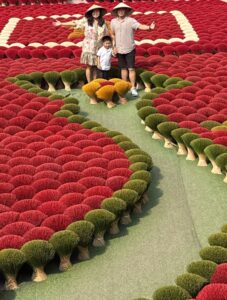
A small traditional craft village famous for incense-making and popular for photography. While it looks vast and dramatic in photos, the actual visit area is much more compact than expected, with most activity centred around a few courtyards and family‑run workshops. What makes it special is not the size, but the process and colours.
During our visit, we were shown how incense is made, from preparing bamboo sticks to dipping them into fragrant paste and laying them out to dry in the sun. Seeing the production up close gave us a better appreciation of how this centuries‑old craft is still carried on by local families today. The bright red (and sometimes yellow or purple) incense bundles arranged in circular patterns are striking, especially in good light.
Fees:
There is no official “entrance ticket” to the village itself
However, many households charge a photography or access fee, usually 50,000–100,000 VND (approx. USD 2–4), payable in cash
The fee typically allows you to:
- Enter private courtyards
- Take photos among the incense displays
- Observe or briefly learn about the incense‑making process
- Fees can vary by household and may change depending on crowd levels and photography use
2) Hoàn Kiếm Lake
This place is the symbolic heart of Hanoi, offering a calm contrast to the city’s busy streets. After navigating the surrounding traffic, walking around the lake felt noticeably slower and more relaxed, with tree-lined paths, cafés, and older buildings framing the water. We saw locals using the space in everyday ways — exercising, chatting, or simply sitting by the lake – which gave the area a very lived-in, local feel rather than something created just for visitors.
The small Turtle Tower in the middle of the lake and the red bridge leading to Ngọc Sơn Temple added a strong sense of history without feeling overwhelming. We enjoyed the area freely without any entrance fee, although there is a small charge if you choose to enter the temple itself. It was easy to imagine how the atmosphere changes throughout the day, especially early in the morning or in the evening, and we were told that on weekends the surrounding streets often close to traffic and turn the area into a lively pedestrian space.
3) Tran Quoc Pagoda
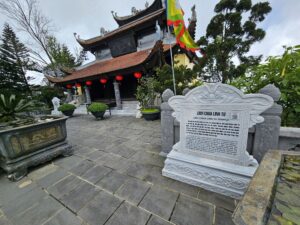
It is one of Hanoi’s oldest Buddhist temples, set beside West Lake in a calm, open setting that feels far removed from the busy Old Quarter. The pagoda itself is not large, but it’s visually distinctive, with traditional temple buildings and a tall red stupa reflected in the lake. It’s an easy cultural stop rather than a deep sightseeing experience and works well when combined with other city highlights. Because it remains an active place of worship, visitors should dress modestly and move quietly through the grounds.
- How to get there: Around 15–25 minutes by taxi or private car from the Old Quarter; often included on Hanoi city tours
- Dress code: Cover shoulders and knees; remove hats in prayer areas
- Entrance fee: Free (small donation optional)
4) Old Quarter
Walking through the area was where Hanoi felt most alive to us, with narrow streets packed with shops, cafés, and street‑food stalls, and constant movement in every direction. It was busy, noisy, and full of energy, but in a way that felt authentic rather than overwhelming.
We stopped for lunch at Hương Việt Restaurant (13 P. Hàng Cá, Hàng Bồ, Hoàn Kiếm, Hà Nội, Vietnam), which gave us a welcome break from the streets outside. One dish that really stood out for us was bánh xèo – a crispy rice pancake filled with meat and vegetables, served with fresh herbs and a dipping sauce. It was light, flavourful, and a great introduction to Vietnamese food beyond the more familiar dishes.
5) Đường Tàu (Train Street)
This was one of those places we were curious to see, mainly because of how often it shows up in photos and travel videos. The street itself is extremely narrow, with homes and small cafés sitting right alongside the railway tracks, which immediately gives you a sense of how close everyday life is to the trains here. When we arrived, our guide explained that the train had already passed and that access is often regulated depending on timing and local rules.
Because of that, we didn’t linger and simply walked past for a quick look. Even without seeing a train come through, it was still interesting to observe how closely the tracks run past the houses and how residents adapt to it as part of daily life. We followed our guide’s advice, treated it as a brief pass‑by rather than a stop, and were mindful of the safety guidelines in place, which felt like the right approach in this area.
January is winter in northern Vietnam and can feel cool and damp. Pack layers. Average temperatures are often around 15–20°C with relatively low rainfall compared with other months.
Da Nang – Ba Na Hills & Golden Bridge
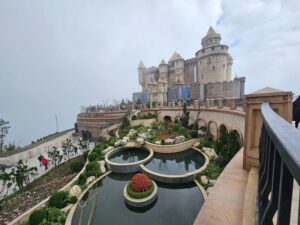
Although Đà Nẵng itself is a modern coastal city, Bà Nà Hills was the part of the day that really stood out for us. We travelled there by private vehicle from Chân Mây Port, with the journey taking roughly 1.5 hours, and the drive into the mountains felt like a refreshing change from the coast. The shift in scenery alone made it feel like a completely different experience, and it quickly became clear that this was more than just a quick sightseeing stop.
Once we arrived, we realised that this isn’t a “quick stop” kind of place – it’s big, there’s a lot of walking, and there are multiple areas you’ll want time to explore properly.
One of the biggest highlights for us was the cable car ride. It’s scenic and surprisingly calming as you climb higher, and it sets the tone for the day before you even reach the main attractions.
Up top, we loved the French Village and castle area — it ended up being our favourite part by far. The architecture, the atmosphere, and the open spaces made it feel like the place where you could slow down and actually enjoy being there (instead of just lining up for the next “must-do” photo). We took our time walking around, soaking up the views when the clouds shifted, and it was honestly the area we kept coming back to.
The Golden Bridge, on the other hand, was a bit underwhelming for us — and I think it was partly because we’d already seen the beautiful castle/French Village area first. When we visited, it was very foggy, so the bridge wasn’t very visible, and the area was packed with tourists trying to get the same “perfect” photo. Between the limited visibility and the crowds, it was hard to properly appreciate it. If you’re hoping for clear views, it’s worth knowing that fog is common, especially in cooler months, and it can really change the experience.
How Long to Explore (Our Recommendation)
Plan for a full day (about 6–8 hours). Bà Nà Hills is large, and you’ll do a lot of walking between attractions and viewpoints. We were glad we didn’t try to squeeze it into a short visit – it’s much more enjoyable when you can move at your own pace.
January in central Vietnam is generally milder than the north, but it can feel cooler up in the mountains, and fog is common at Bà Nà Hills. We were glad we had a light layer with us, especially when the mist rolled in.
You can buy tickets:
- Online via the Sun Paradise Land App or the official Sun World website
- At the entrance via ticket counters or self‑service kiosks
If you want to save time, buying online before you go is a good idea — queues can build up quickly.
Ticket prices can vary depending on the season and the package you choose, but as a general guide, they range from around 800,000 VND to 1,000,000 VND. Tickets typically include the round‑trip cable car and entry to major areas such as the Golden Bridge, French Village, and Fantasy Park. We chose the combo ticket with the buffet lunch at the Four Seasons Restaurant, which cost 1,300,000 VND for adults, with discounted rates available for children. For us, it was absolutely worth it—not only was it time‑saving (no hunting around for food), but there was also a great variety of Asian and Western options, so everyone in our group could find something they liked.
What to Prepare (Simple Checklist)
- Identification + your ticket (digital is fine if bought online)
- Cash or payment card
- Umbrella (weather changes fast)
- Light jacket (cooler in the mountains)
- Comfortable footwear (you’ll walk a lot)
- A spare shirt (helpful if it’s humid or you get caught in mist)
Crowd tip: If you can, go early in the morning or on a weekday to reduce crowds and enjoy the place more comfortably. Also step away from the main viewpoints — even a short walk can give you quieter corners and cleaner photo angles.
Ho Chi Minh City (Saigon) – Southern Energy
Fast‑paced and full of energy, the atmosphere was shaped by incredible food, busy markets, and powerful landmarks that brought Vietnam’s modern history to life for us. One of the things that stood out was seeing locals gathered at street food stalls, sitting on tiny plastic chairs along the footpath while the streets rushed by. From steaming bowls of pho to simple dishes prepared right on the street, food was a constant presence and offered a glimpse into everyday life in Saigon.
The city is well connected by air, with Tan Son Nhat International Airport (SGN) serving both domestic and international flights. Transfers into central areas such as District 1 are straightforward, and once in the city, taxis, ride‑hailing apps, and walking make it easy to get around.
The following attractions were the highlights of our visit and are well worth including in a short itinerary.
1) War Remnants Museum
We found the War Remnants Museum to be one of the most powerful and confronting places we visited in Ho Chi Minh City. The exhibits document the Vietnam War in a very direct and emotional way, and while some sections were difficult to see, we felt it was an important experience that added depth to our understanding of Vietnam’s modern history. The museum is typically open from around 7:30 AM to 5:30, with an entrance fee of about 40,000 VND, and we spent roughly one to two hours here taking our time through the galleries.
2) Independence (Reunification) Palace
The Independence Palace is an important historical landmark, preserved largely as it was in 1975 and closely associated with key events in Vietnam’s modern history. Visitors can explore the grand rooms and underground areas, which offer insight into the political and historical significance of the site. Allowing around one to one and a half hours is generally sufficient to visit the palace and its grounds.
3) Saigon Central Post Office
The Saigon Central Post Office was one of our favourite stops, thanks to its beautiful French‑era architecture and lively atmosphere. It is still a working post office and free to enter, making it an easy stop while exploring District 1. We bought a postcard here and mailed it back to our home in Australia as a souvenir; it arrived about three weeks later, by which time we were already back from our holiday. We spent around 20–30 minutes inside, enjoying the building and browsing the counters.
4) Notre Dame Cathedral (District 1)
We stopped by Notre Dame Cathedral, although it was undergoing renovation during our visit, so we were only able to view the exterior. Even so, it was still worth seeing from the outside, especially since it is located close to the post office and fits easily into a short walking route around the area.
5) Ben Thanh Market
We ended our sightseeing at Ben Thanh Market, where we wandered through stalls selling local produce, spices, souvenirs, and street food. Sitting on tiny plastic stools at low tables, we sampled a few snacks and enjoyed the lively atmosphere. Depending on how busy it was, we spent about one to two hours exploring the market.
Weather During Our Visit (January)
We visited in January and found the weather ideal, with warm days and very little rain compared with the wetter months.
Practical Information for Vietnam
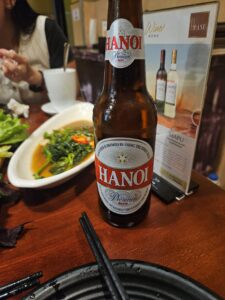
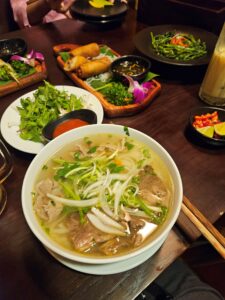
Food in the city is generally affordable and offers a wide range of options to suit different budgets. Street food and local eateries are the most economical, with simple dishes such as pho, banh mi, and rice or noodle meals typically costing around 50,000–80,000 VND. Small local restaurants and casual dining spots usually charge 70,000–150,000 VND per dish, depending on the location and type of cuisine. Mid‑range restaurants, particularly those catering to tourists or offering international menus, are more expensive, with main dishes often priced between 150,000 and 300,000 VND. Drinks such as iced coffee, fresh juice, or sugarcane juice are inexpensive, while cafes and rooftop bars tend to be pricier. Overall, eating out is very accessible, and even with a mix of local and mid‑range dining, daily food costs can remain quite reasonable.
Cash is still useful, especially at markets and small eateries, although larger establishments often accept credit cards. ATMs are widely available in major cities.
Vietnam is generally a safe destination for travellers, though it’s wise to take normal precautions.
Things to be aware of:
- Taxi scams: Some drivers overcharge or use rigged meters. Use Grab or well‑known taxi companies where possible.
- Pickpocketing & bag snatching: More common in busy tourist areas – keep valuables secure and avoid using your phone near the roadside.
- Money scams: Poor exchange rates, fake notes, or confusion between similar‑looking bills can occur. Exchange money only at banks or ATMs.
- Tourist overcharging: Prices may be inflated for visitors. Always confirm the cost before buying food, services, or souvenirs.
- Fake tours & tickets: Extremely cheap deals often come with hidden fees – book tours and transport through trusted agencies or hotels.
Overall tip: Stay alert, trust your instincts, and walk away if something doesn’t feel right. With basic awareness, Vietnam is an easy and rewarding country to explore.
Tap Water
Tap water is not recommended for drinking. Use bottled water for drinking.
If your trip falls near late January or February, you may experience Tet (Vietnamese Lunar New Year). It’s festive but can be busy, with some businesses operating on reduced hours.
Most travellers require a Vietnam eVisa.
Our tips:
- Apply at least 1 month before departure
- Use the official Vietnam eVisa website
- Print a copy and keep a digital version on your phone
Visa reminder: Entry and visa requirements can change and may vary by nationality and itinerary. Always confirm current rules via official government sources (or your cruise documentation) before travel.
Final Thoughts
Vietnam offers an incredible mix of culture, food, scenery, and history — and this itinerary is perfect for travellers who want a smooth, well‑paced introduction without juggling too many hotels or complicated transfers. With thoughtful planning, private tours, and choosing the right inclusions, exploring Vietnam can also be surprisingly cost‑effective.
Thinking of planning a similar trip?
I can help you:
- Compare itineraries based on your travel style
- Choose the right hotels for comfort and value
- Plan visas, flights, and transfers
- Build a personalised itinerary that fits your budget and interests
Just reach out when you’re ready to start planning.
By Melody Fernando · Last updated: 03 March 2026